University Press Coverage, April 2026
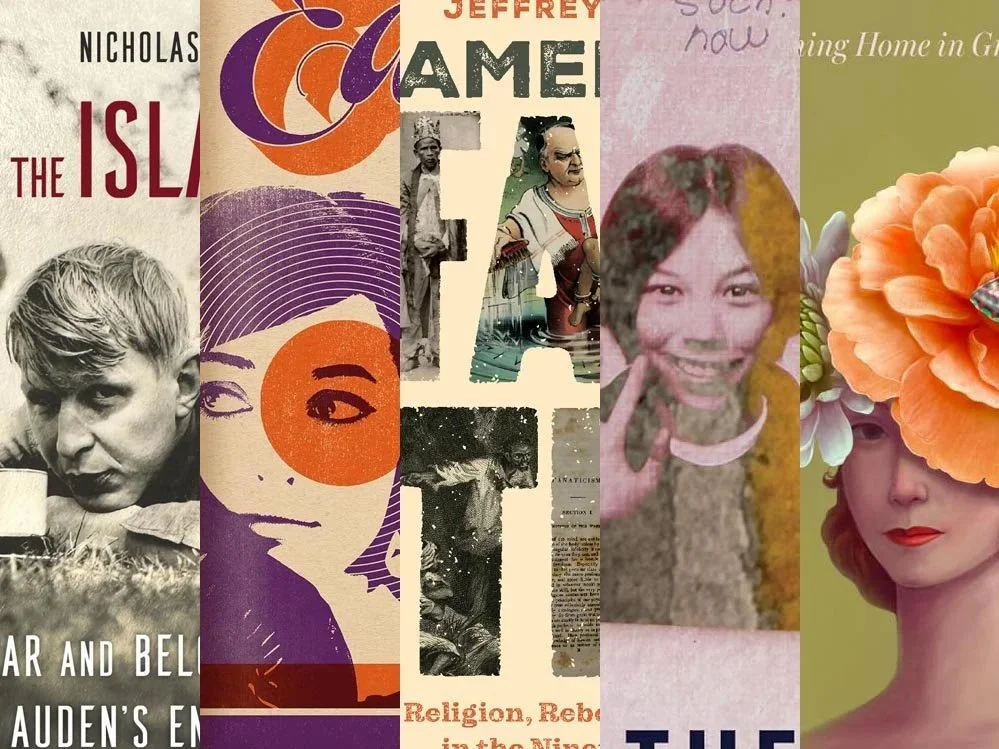
Welcome to our University Press Coverage — known as the Uni-Press Round-Up on the right side of the Pond — a ongoing feature in which we highlight, with commentary, a selection of university and academic cover designs published this month. Please enjoy this celebration of amazing work.
The selections are in alphabetical order by press. Where possible, credits are listed in the captions (often with links to the designers’ other work), and each cover includes a link to the university’s official page for that title.
As with all cover designs we feature, we encourage you to head to your local library, college or university library, or bookstore to view the works in their full splendor.

University of Chicago Press. Cover design by Ryan Li; art director, Jill Shimabukuro.
Privatized, for-profit addiction treatment could not possibly get a better image: Nixon in a syringe.
“I am not a plunger.”
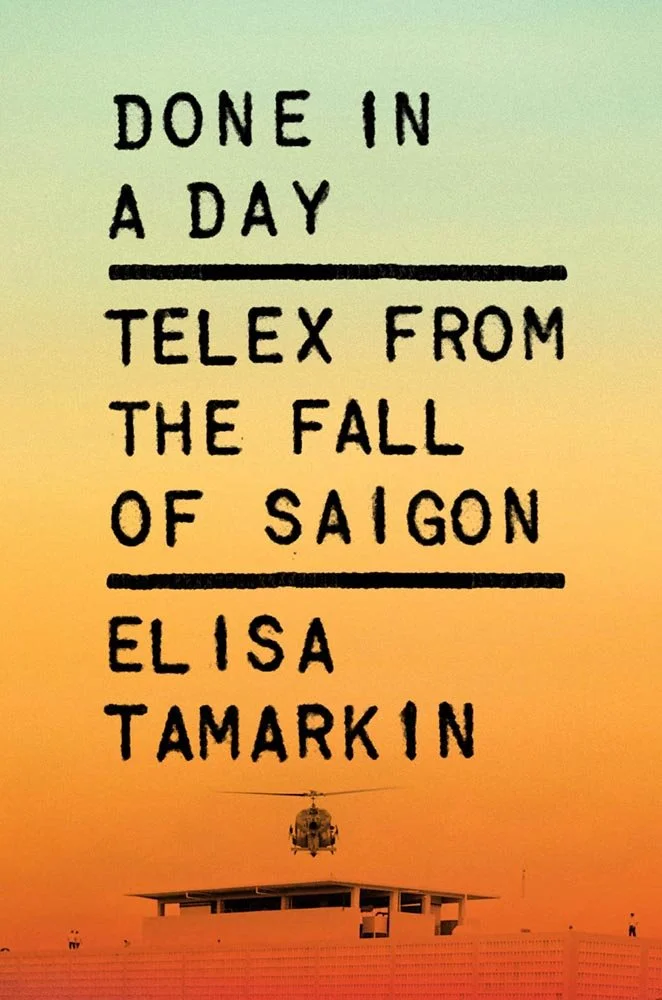
American history is marked by a surprising number of times where events turn on a single day, one of which is pictured above: the evacuation of the embassy in South Vietnam, April 30, 1975.
The author’s stepfather, the Saigon bureau chief for the Chicago Daily News, was on one of those helicopters — “the last American correspondent to leave Saigon as it fell. His report was filed from a naval ship on the South China Sea at a time when no other telexes were going through.”
As cover designs go, it’s sometimes best to let iconic images do the heavy lifting; here supplemented with a gradient that does some heavy lifting of its own, and telex-style aged text that works incredibly well, full stop. Great stuff.
Chicago UP Bonus: See also Turning Away, best described as “classically perfect.” (I already had enough covers for this month, but couldn’t resist giving it a mention.)

“How has bacon overcome centuries of religious prohibition, cultural contempt, and dietary advice to become a twenty-first-century culinary and cultural powerhouse?”
Well, the cover, at least, strips away the pork and sticks with quality ingredients, with appropriate aging and just a hint of multilayered goodness folded in.

Harvard University Press.
One of those covers where the photograph just steals a look the show: you know the basics of what this title is about just by glancing at the image. (Bonus points for the subtle graining/texture.)
Read more about the new paperback edition of this 2024 title.
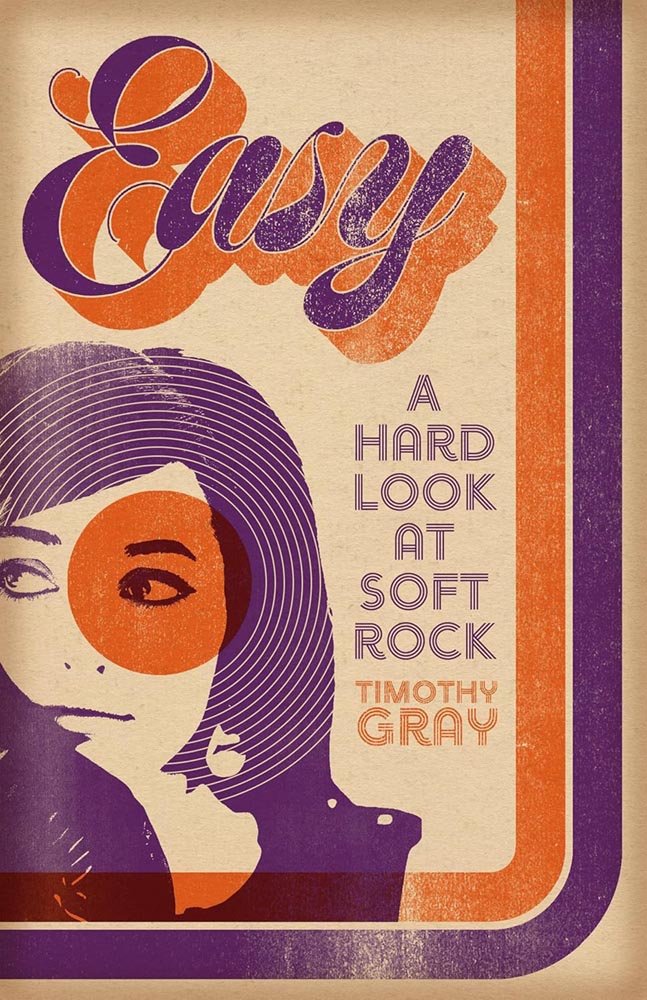
University of Iowa Press.
Speaking of “looks,” the use of the record’s center label to highlight here is genius. Added together with brilliant typography, some great blending, and just-right aging, and the result is easily a top-40 that’s going to chart all month.

Louisiana State University Press. Cover design by Kaelin Chappell Broaddus; art direction, Barbara Neely Bourgoyne.
“Grit Lit [is] a movement in contemporary southern literature written by and about poor southern whites. … For those long dismissed as ‘white trash’ and denied an active voice in their own representation, [it] confronts the parallel concerns of finding a way to describe themselves and the means to communicate it appropriately,” the description says — backed up by a cover that says all that and more.

Monochrome first draft for this University of Manitoba title, based on…:

…this turn-of-the-century immigration pamphlet/flyer.
The University of Manitoba’s Stephanie Paddey writes, “David Drummond designed the cover for Imprinting Empire. We don’t have a formal art director at UMP. We tend to work quite collaboratively, so feedback was a result of conversations between our former production editor, Barbara Romanik, myself, and Kyla Neufeld (our current production manager).
“The author’s intended title for the work was Hastening the Change. When we saw Drummond’s initial designs, Hastening the Change looked a little tepid on the cover, though we liked some of his ideas.
“When we landed upon Imprinting Empire, the design became stronger. The typeface was inspired by an old immigration pamphlet that Barbara found. The first iteration of the cover we saw was monochromatic, and while ‘newspapers’ came across very clearly in the first version, we wanted to see ‘land’ represented too.”

“We’re all very happy with the result.” Agreed! (I especially love the hint-o-homestead in the foreground.)
Many thanks for the extra details!
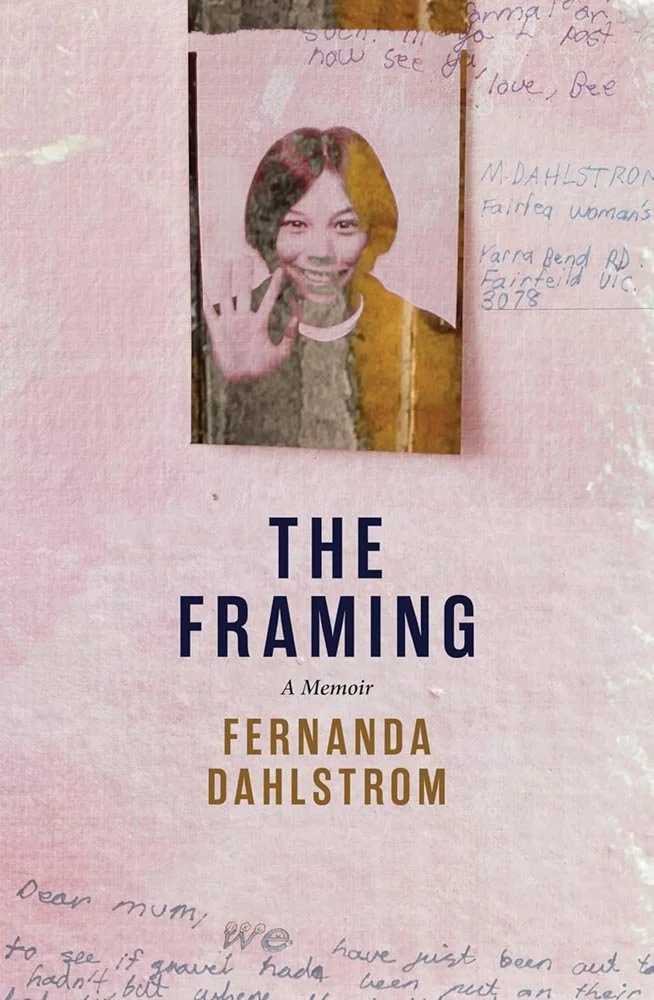
Melbourne University Publishing. Cover design by Nada Backovic. Cover image and correspondence courtesy of Fernanda Dahsltrom.
You’re eight years old and your mother has just been put in jail. Framed, as it turns out.
What do you do? Well, in the case of this author, you survive, prosper, become a lawyer, and write a memoir.
…With a cover worthy of that task. It’s not flashy, it’s got a simple type treatment — but that image, together with the letters clearly written by the author to her mother, basically compel you to take a look. Then a second.

University of Minnesota Press. Cover design by Michel Vrana; art director, Carla Valadez. Cover illustration by Rick Guidice, from Space Settlements: A Design Study, a 1977 manual from NASA.
Minnesota’s Carla Valadez writes, "[t]he author pointed us to the NASA illustration, which we think is excellent and communicates useful information about the book at a glance, including the decade of film discussed and the focus on science fiction and environmentalism/ecology. We love the overall retro feel of the composition and its nod to mass market sci-fi paperbacks of the 1970s."
Indeed, it was the illustration that caught my attention, which when combined with the style, type — that “F” is chef’s kiss — and illustration fill in the title add up to a look that is the antithesis of dystopian.

New York University Press. Cover design and art direction by Rachel Perkins. Cover images: F: Papa Isio. A: President McKinley. N: Charles Guiteau. A: Harriet Beecher Stowe. T: Nat Turner. I: Fanaticism by Isaac Taylor, 1833. C: Charles Grandison Finney. S: Thomas Jefferson.
“In 1822,” the book’s description reads, “Thomas Jefferson wrote that the ‘atmosphere of our country is unquestionably charged with a threatening cloud of fanaticism.’ Indeed, during the nineteenth century the United States was full of radical theologies, messiahs, utopian dreams, passionate exhortations, and sacred violence.”
Sure, because two hundred-odd years later, the U.S. absolutely cannot be described as, “overly emotional, delusional, and inherently violent,” transforming “fanaticism” from “a term of Christian theology into one of religio-racial security, wielding it as a tool of domestic and imperial governance.”
In other words, irrelevant topic. Nothing to see here.
(Cool cover, by the way.)

University of North Carolina Press.
“From Southern California berry fields to Japanese American concentration camps, from Chinese cooks in national parks to Chicano Civilian Conservation Corps workers, [this title] traces how the racialized labor and environmental knowledge of Asian migrants and Chicana/o communities built the material foundations of modern environmentalism.”
Somewhat like Fanatics, above, we’re reminded into how history is tightly interwoven with today’s life, through “everyday struggles of frontline communities to live and work with dignity.”
The highlight here is a great woodcut-style illustration and some oddly-satisfying barbed-wire dingbats, complimenting the type and colors. Nice.

Stanford University Press. Cover design by Abby Weintraub; art director, Michele Wetherbee. Cover art: Braginsky Collection, Zurich.
Colored pencil and ripped paper: not what you’d expect for a historical title like this. But it works. Then you realize that the art is as historical as the subject. That the ripped paper and type add a modernity. That there’s more here than the first glance suggests.
One of those that gets better as you look at and think about.
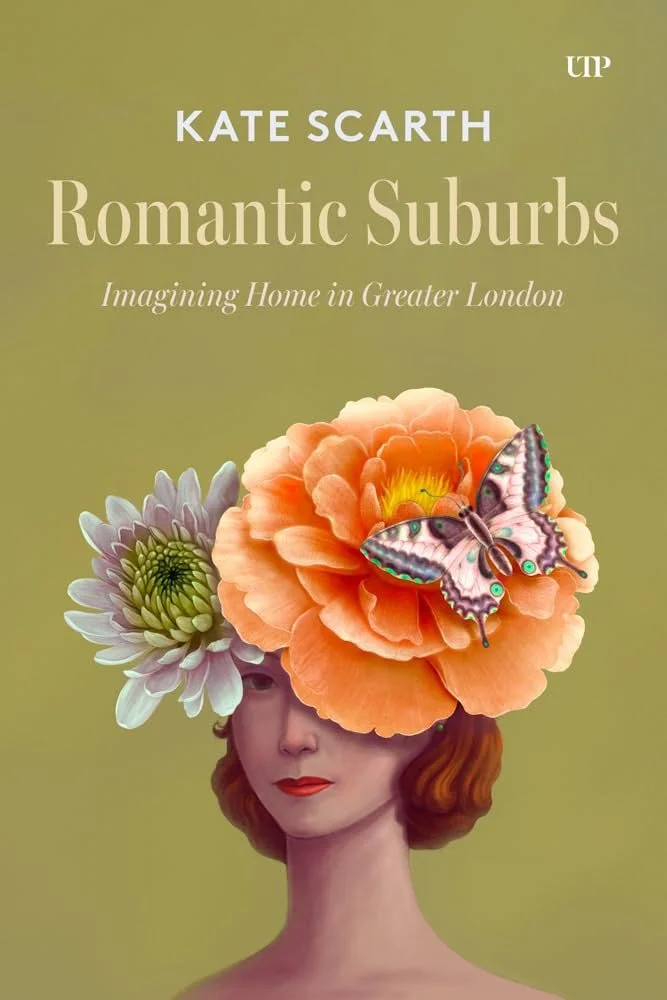
“Romanticism and women’s fiction … help shape the story of suburban development – a phenomenon that continues to influence twenty-first-century life globally.”
English women and their many hats.
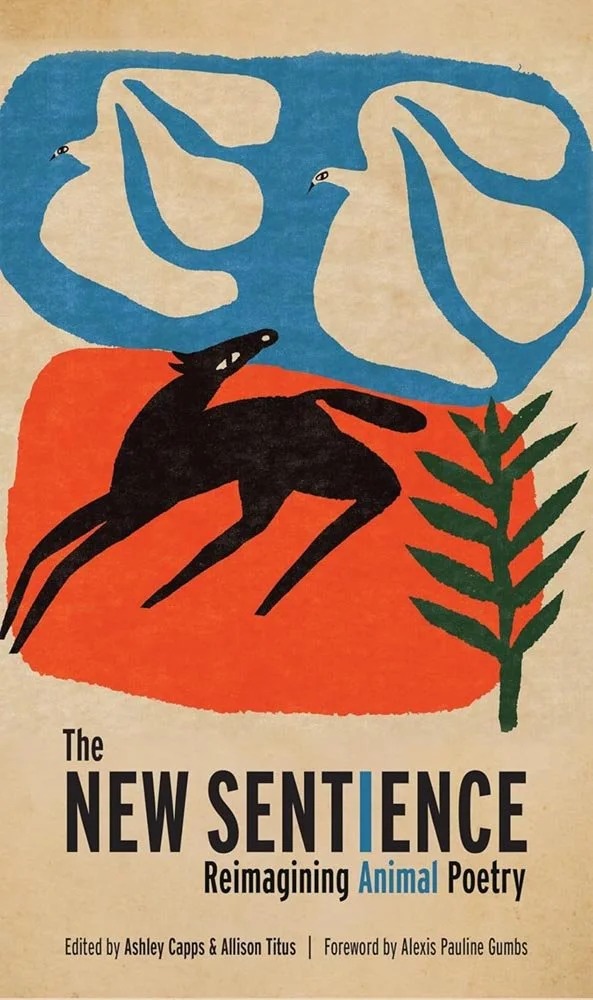
Trinity University Press. Cover design by Robert Salinas, DVS Design; art director, Sarah Nawrocki. Illustration by Enikö Eged.
We’re all animals, really — who would be lucky to be so well illustrated.
And it should surprise no one by now that I completely agree with the statement that, “urgent reconsideration of our relationship to other animals is not only necessary but overdue.”
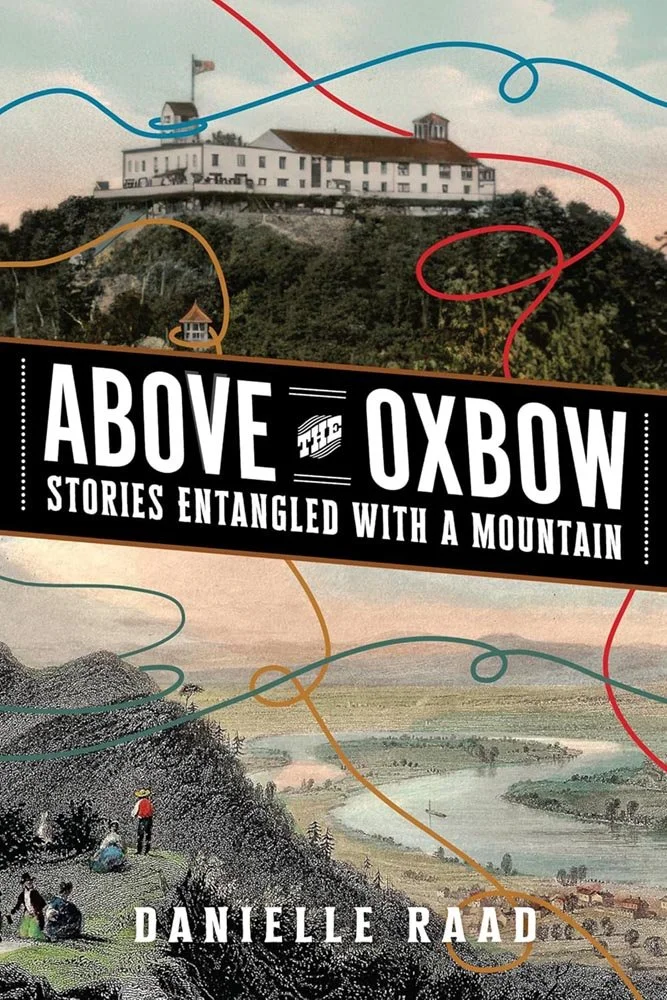
West Virginia University Press. Cover design and art direction by Than Saffel. Cover images: (Top) Postcard of the Mount Holyoke Summit House published by the Springfield News Company of Springfield, MA. Courtesy of South Hadley Public Library. (Bottom) “View from Mount Holyoke,” an 1835 illustration by William Henry Bartlett, which appeared in the book American Scenery, published in London by George Virtue.
An assistant professor of history and museum studies at the University of Georgia writes about a Massachusetts landmark for a West Virginia University Press.
With that context in mind, designer and art director Than Saffel writes, “the author’s notes on direction were very clear and specific, so I worked with her to realize the idea she contributed, which centered on strands or threads of connection surrounding and emanating from the summit of Mount Holyoke and the Summit House hotel. The only real challenge was in combining the two images, from separate historical periods, in a way that made sense to the eye. My contribution was in applying my own design sensibility to the specific choices of typeface selection, decoration, and structure.”
Mission accomplished, sir.
Are you a book cover creative, art director, or publicist? If you want your work, or the work of your press, to be reviewed be sure to get in touch with us.
Please include the cover designer’s name, the art director’s name, any additional details like illustrator or photography credits, and the publication date. (Yet-to-be-published titles are welcome, with embargo dates if applicable.) Images should measure 1200-1500px on the long side, preferably in JPG format and the sRGB color space.
We look forward to featuring your work soon!
A freelance designer and photographer, Giles has been writing about book design for nearly thirty years. During his spare time, he walks, explores architecture, and enjoys music on a great stereo. He lives in Middle Georgia with a dog and cat.